
Tricksters, Tyrants and Toxic Masculinity
January 10, 2026
Baby Steps: Integrate Your Shadow
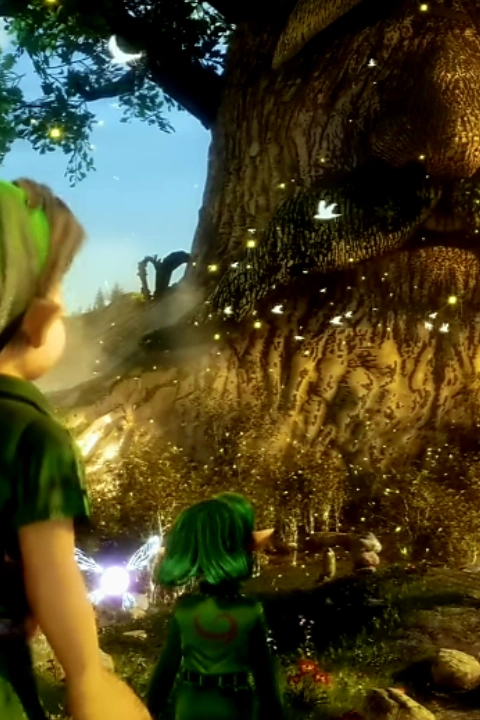
February 7, 2026In the first part of this series, we studied Link as The Divine Child and his adventures through the Great Deku Tree. As a brief reminder, after Link conquers the evil within the Great Deku Tree, he is then directed to travel to Hyrule, where he meets Princess Zelda and receives his charge to collect the other two sacred stones. We’re going to dive deeper into that interaction another time, and in typical Link fashion backflip our way right over to Death Mountain, where Link enters the next critical phase of his pyschological development: the Precocious Child.
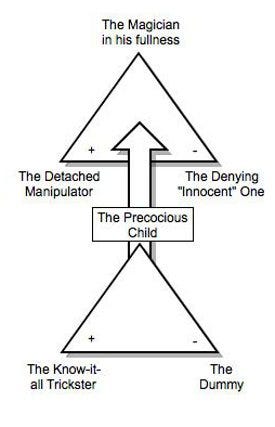
The Precocious Child archetype follows the Divine Child and usually appears in children around ages 6-10. It’s at this point where curiosity is a primary driver, children seem awakened to just how large the world is around them, and their sponge-like minds become greedy and eager to soak up every fact. Perception and discernment becomes the primary tools, or weapons, of a child in this phase.
There are two shadow poles to this archetype, the Know it all Trickster (active) and The Dummy (passive). Gratefully we see Link in the game adopt the passive role rather than the active, because, as adults, we know that nothing is more insufferable than a know-it-all who definitely doesn’t know it all.
But for Fathers (and Mothers), the annoyance is the point. What are our children really telling us with their incessant “Why, why why?” question threads, or when they correct you on a factual or grammatical mistake?
Tricksters have a role, and there is a courage in the work children do to try and humble their parents every now and then.
The Trickster also can never die - you can’t punish, ignore, or entice it out of your child - with enough attempts you might push your child over to the passive shadow pole of “Dummy” where their trickster dialogue stays within their mind, and they no longer let you know what they’re thinking. All you’ve done is lose your access to their thoughts.
This is where we see the shadow of Link in his precocious phase. He comes across (to us, the gamers) as essentially mute, which is a running point of humor with the Zelda games. Is he not playing the Dummy, to some extent this way? Masking his intellect?
We see this when Link meets with Darunia, the King of the Gorons. The Gorons are (arguably) not the sharpest boulders on the mountain, if you understand my meaning.
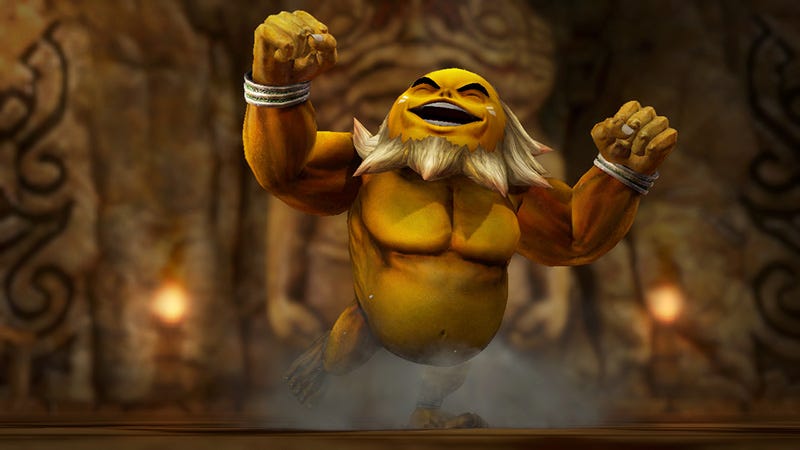
Darunia (another Father figure, interesting) is so preoccupied with anger that he refuses to engage with Link when he arrives. Now as a gamer, you eventually gather enough context clues that lead you to learn Saria’s song and bring that to Darunia, where you play the song and the Goron King breaks out in epic dance.
What we’re really seeing is a clear symbolic message to our young men - Saria’s song, deemed by the game itself as a song of friendship, comes directly from the Kokiri forest, which represents childhood innocence and all it’s magic. Fun is the antidote to the paralyzing stress that the Goron King is suffering from.
For fathers, this is a real treasure. Our children can remind us of the beauty and wonder of childhood, as we get to live it again through our children. Fathers often are stymied in the quagmire of work and other responsibilities, and find themselves, like the Goron King, frozen on their thrones, captured by the stress of providing and leading in dark times. As our children grow into the precocious phase, they learn quickly how to better perceive the pains of their fathers, and use their trickster powers for good, bringing humor, joy and a reminder of the purpose that drives every father.
After the dance-off of the century, Darunia is awakened and takes note of Link. He thanks him for snapping him out of his anger and rewards him with a special bracelet that grants Link the strength to pluck bombs from the bomb flower plants growing all around the mountain.
This is the generational bargain - sons offer fathers youthful energy, respect and, most importantly, fun. Fathers in return offer their sons strength, wisdom, and guidance. Laughter, play and fun is the currency with which trust is purchased and the transaction made.
After having made this transaction, Link is now empowered to tackle the bigger problem within Death Mountain - the King under the Mountain, the King Dodongo.
The King Dodongo is titled in-game as “The Infernal Dinosaur” which was reanimated, along with a lot of its spawn, by Ganondorf. He weaponized this ancient species against the Gorons in an attempt to extort the magical Ruby from Darunia, but when Darunia refused, Ganondorf sealed off the cave entrance to the only source of food for the Gorons and left.
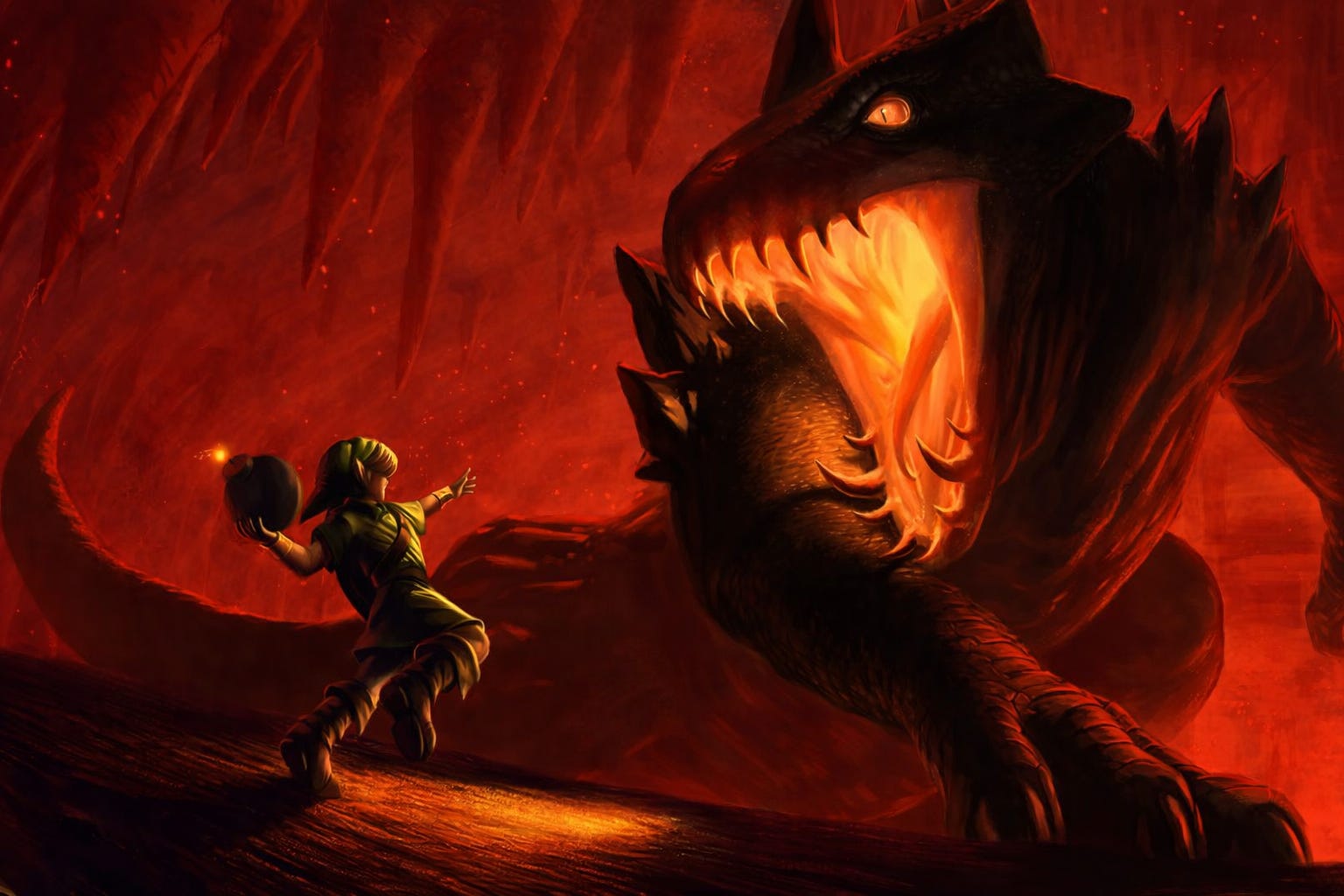
Link then uses his newfound strength to pluck a bomb and blow up the boulder blocking the cave, and ventures into the depths to fight and destroy this ancient King.
Symbolically this is beautiful, especially when taking into account that the Gorons are starving due to having become too accustomed to the delicious (and apparently for Gorons, highly nutritious) sirloin rocks to consider eating any other rocks found within or on top of the mountain.
So what is the real monster here? What is really killing the Gorons, what is the beast that only Link, a child, can destroy?
Tradition.
Tradition is both the treasure (the gems and sirloin rocks that Gorons crave) and the fire-breathing dinosaur that terrorizes those who seek to obtain the treasure.
The infernal dinosaur is a sublime symbol for the dangers posed to our youth from outmoded and unadapted traditions that we carry along from generations past. We see this throughout history time and time again. Men like Ganondorf rise up, recognize that some traditions have grown and cemented over time out of ignorance and fear, and attempt to weaponize those against the populace.
Human sacrifice, slavery, racism, abuse, all carried from one generation to the next. Until, that is, men take a stand and fight to improve the world for their children. It is precocious children that help their fathers see the error in these malicious traditions and inspire them to take action.
This is what precocious children do. They poke and prod at the world, they ask “why” approximately 1 million times more than you’d like them to. They force you to justify the state of the world as you are preparing to hand it to them.
“Why is it broken?”
“Why haven’t you fixed it?”
“Why do we do it that way?”
Our children lob these truth bombs (pun intended) in question form directly into the mouth of the beast of tradition that wants to consume yet another generation - just like Link who throws bombs into the Dodongo’s mouth to damage it from within. Eventually between internal explosions and sword attacks, the King Dodongo loses balance, rolls into the fiery lava of the mountain, and is dead once again.
Once the King Dodongo is dead, the Gorons celebrate Link and end their famine by feasting on the bounteous rocks found within the Dodongo’s cave. Darunia then gifts Link the Goron’s Ruby, and declares Link a sworn brother. A perfect metaphor for reward that resides in the future for precocious children who use their intellect to the advantage of them and their community. Link has stepped out of the limiting box of “child” and is now respected as a peer.
So what does this mean to you, the father reading this article? If you child is sliding into either of the shadow poles then each approach is different.
Fathers, when dealing with a know-it-all
When your children recognize your weaknesses, flaws or begin to show their promise and potential during their precocious phase, do not be intimidated. Do not be threatened, angry or jealous. Don’t take their jokes, jabs or laughter seriously. In fact you have a very important lesson to teach your children as they attempt to poke fun and mock you.
Model the behavior you want to see in them when they become fathers, and show them how to laugh at your own mistakes or flaws. Allow yourself some grace, and don’t take yourself too seriously.
Wonder with them when you don’t know. Help them find answers to questions they thought you should have learned by now. Laugh at yourself with them when you slip on the ice.
They are watching how you react to all the grief they give you, and they are learning how to take criticism from you as they fire it off directly at you.
In essence, model the Fool archetype, that is humble enough to learn anything from anyone. This is an antidote to the know-it-all, even if the lesson takes a decade to sink in.
When dealing with a “Dummy”:
Patience will win the day. Build their confidence, and show them how a fool like you became the magician they see before you. Remind them that you were a boy once too. Remember that they see all that you do, and when the time comes, they’ll pull from what you’ve shown them to become a version of a man that greatly resembles what you are, right now. Take in the weight of responsibility that comes with increased knowledge, and introduce that weight to your sons. Let them heft it every now and then, get a feel for it, then take it back upon your shoulders until they’re strong enough to take it from you permanently.
Your boys are evolving, and doing so rapidly. Assisting them in this transition will set the trajectory for their next phases, the Oedipal Child and ultimately the Hero. But out of all the phases of boy psychology this is the one that will hold a mirror up to you and how you are faring as a father. Buckle up.