

Boy Psychology Part 2: The Precocious Child and the Infernal Dinosaur
January 15, 2026
Spontaneous Mental Combustion and the Emotional Flood
February 28, 2026(If you read anything today, let it be the TL;DR section at the end)
My two oldest boys, up late with a cold that wouldn’t let them rest, were introduced to one of Bill Murray’s finest performances (at least in our household) - What about Bob?
It’s canon in our house and required viewing before you set out on your own. Primarily for the laughs, but as we watched it last night, I realized something interesting.
Bob Wiley and Dr. Leo Marvin? They’re the same guy. You can’t unsee it once you envision that every action of the two, if you attribute them to one man, you’ll find the movie not only still works, but now delivers a message for men with incredible depth. Bob is merely Dr. Marvin’s shadow - his impulses, his desires, his nightmares and his fantasies.
The Shadow (in Jungian psychology) refers to the largely unconscious aspects of the personality that the conscious ego does not identify with or accept. It typically contains traits, impulses, emotions, and potentials that have been rejected, repressed, or disowned because they conflict with one’s self-image or social identity. While often associated with negative qualities (e.g., aggression, envy, weakness), the shadow also contains undeveloped strengths, creativity, and vitality. Psychological development involves recognizing, integrating, and taking responsibility for the shadow rather than projecting it onto others.
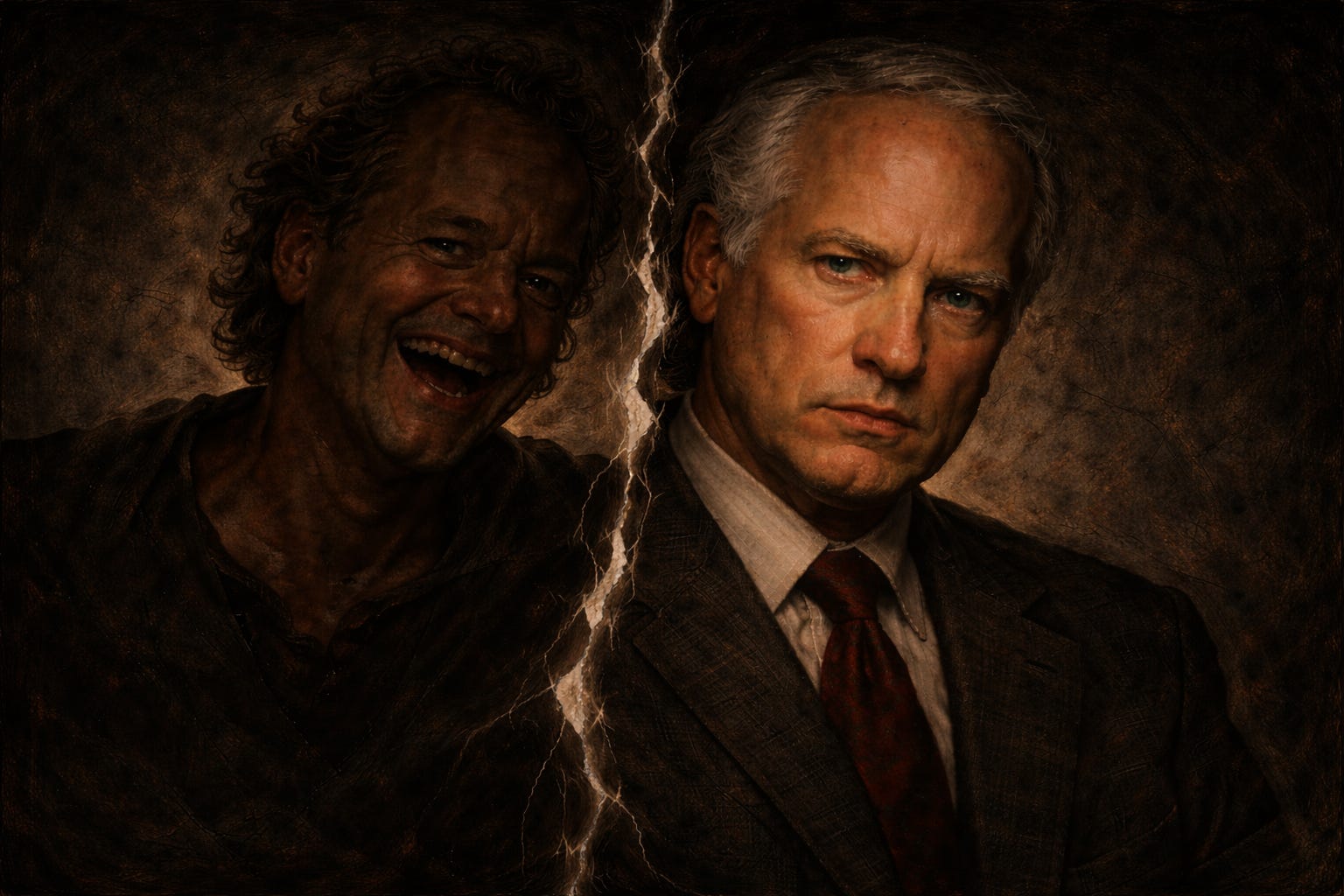
First off, Dr. Marvin is a good Dad, in general. He’s worked his way to fame, he manages his business well and dedicates time to his family. He’s a good provider and works hard to not only fit into society, but climb to the top of it. This level of discipline and effort requires more of men than most realize. A man’s shadow grows long while toiling under the hot sun (proverbially), and Dr. Marvin toiled, a lot, to be where he is now. He is an elite of New York City, the “pinnacle of humanity”, and is prepping for his TV debut with his new book, soon to be shown to all the world. But the baby was cast out with the bathwater, and his joy, spontaneity, and “fun” got thrown into the sack of undesirable behavior that he now carries slung over his shoulder (with very good posture, I might add). He’s bland, void of any points of interest and completely absorbed with climbing the ladder of success. Nearly every point of his personality was mis-identified as a threat by his psyche and buried alive in the back of his mind. And everyone applauds, because why not? He’s successful, isn’t he? The metric of financial/corporate success is so heavily weighted when judging a man that we applaud the sacrificing of his identity in its pursuit.
Enter Bob Wiley, whose timing couldn’t be more auspicious (almost as if Dr. Marvin’s subconscious timed it himself).
Bob is mired in constant chaos - shut into a small apartment in the very same city that Dr. Marvin rules. He is afraid of everything, but most of all, afraid of being alone, without human connection - he is desperate for the nurturing only a family can provide. Bob is nothing but personality, the film doesn’t even bother to tell us what he does for work, it’s inconsequential. He is unbearably himself, often at the cost to those around him, a cost he’s only partially aware of.
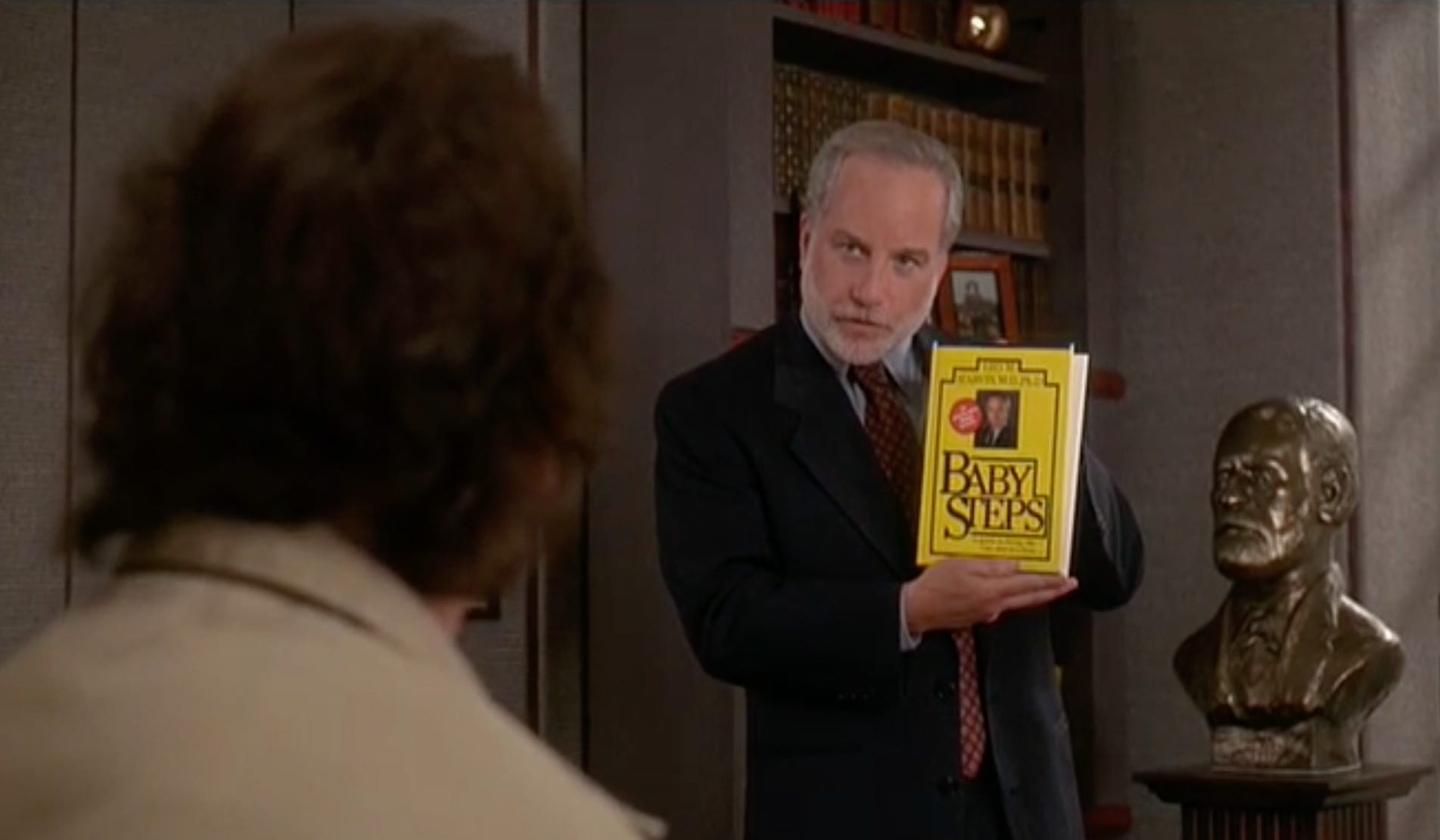
Interrupting a conversation about the national spotlight that Dr. Marvin will soon be standing under, Bob appears in his office and unloads everything. Dr. Marvin, in a cold emotionless state, inspects him and his first directive is to encourage Bob to accept responsibility for Bob’s failed marriage. To assign blame. Then hands him his new book, Baby Steps. What clever writing, for as we all know the only way to boil a frog is slowly, by degrees (baby steps??) and Dr. Marvin doesn’t know it, but he’s in hot water.
Now on to Lake Winnipesaukee.
Bob makes various deceitful efforts to call Dr. Marvin, he keeps popping in (interesting that again it’s often when Dr. Marvin is mid-conversation or thought about his upcoming interview). Until Dr. Marvin is shocked to find Bob in the center of town, shouting his name repeatedly.
Bob is on a mission, he’s determined to spend as much time with Dr. Marvin as possible - and it only seems to be bothering Dr. Marvin. People love Bob, he’s kind, interesting, affable, curious, vulnerable, honest and adventurous. Only Dr. Marvin knows his flaws, his crushing attachment disorder, crippling fear, etc. That is only visible to Dr. Marvin.
And now we see the rapid inversion - the great shadow-swap of Dr. Marvin as he turns into a jealous father pushing Bob off the pier after he helped his son Sigmund dive, or a controlling helicopter parent with his daughter Anna as she goes sailing with Bob. We see it as he turns into a bumbling, stuttering fool on camera, then a madman bent on murder.
All the while, Bob shines brighter and brighter. His creative, open demeanor and childlike fun inspires Dr. Marvin’s family, they are delighted and grateful for Bob. Dr. Marvin is shunted aside by his family as they adore Bob.

Now take this story and apply the two characters to Dr. Marvin (or to yourself!), and blend them into one.
Bob - Fun. Dancing/singing in the rain, sailing, diving, not afraid to lean on others to get what he wants. Also incredibly fragile, panics when alone, crippling fear potentially around every corner.
Dr. Marvin - Strict, disciplined. Committed. Driven. Successful. Also absent of fun. Cold. Distant. Calculated.
Everyone watching the movie would rather hang out with Bob. But there is a huge caveat here. You only want to hang out with Bob, in Dr. Marvin’s House. No one wants to be with Bob in his dank apartment. No one realizes that living with Bob is only fun at the lakehouse - in the city he’s an absolute nightmare.
TL;DR
That’s the crux of the whole movie and what drives Dr. Marvin absolutely (literally) insane. It’s the boring, disciplined Dad that bought the lakehouse. It’s the adamant father that raised competent children. He created the structure that allowed his family to thrive. He wrote the laws to a family that is by all metrics, successful. But they were losing interest in him, because they could not emotionally relate to him.
So all he had to focus on was his career, and it consumed him. As the spotlight shone on him his Shadow overpowered him. His subconscious took charge in order to save his family from himself. And only when Dr. Marvin learned to wake up and accept that Bob wasn’t going anywhere, did his family celebrate his return to reality.
It sounds paradoxical, but that’s exactly what your family needs from you as a father. They need someone to write the rulebook, to create a system that protects and provides, but also they need you to break the rules every now and then, they need you to show them which rules to break, and when, in order to let fun in and shine some light on the difficult times of life.
But don’t swing too far. Bob is best as a visitor. Remember, he only thrives at the lake house. Everyone loves him as long as the bills are paid, the family is safe and there is a lake house. It’s not lost on me (and shouldn’t be lost on you) that too much Bob led to the explosion of the vacation home that the family was enjoying so much.
In conclusion. Have fun with your kids. Show them your curiosity, your honesty and get on their level every now and then. But don’t kill the version of yourself that built the house that protects them in the process.
Don’t be a Bob. Don’t be a Dr. Marvin. Be Both.