
The Warrior’s Path: Why Love Is the Core
October 2, 2025
Extreme Ownership of the Soul
October 2, 2025
Recently a Bill Maher clip has resurfaced where he monologues about the issue of “parents overindulging their children” – he rails against gentle and permissive parenting, complains about the level of coddling happening with the upcoming generation and harkens back to a time where fathers were cold, distant and authoritarian in the home.
He paints pictures that easily trigger a disgust reaction from any reasonable person – kids acting out in restaurants, fathers cow-towing to toddlers in hopes to calm them, the typical “negotatiating with terrorists” scenes you can find in interactions between GenX and Millennial parents and their offspring. We’ve all seen those happen in the wild, and the masculine response to such a sight is similar to what Bill Maher wants to see happen. Use force. Fix the problem. Shut the kid up, make them understand that they aren’t the center of the universe.
I totally get it. As a father of five, I feel that feeling almost every day in some capacity or form. To work all day and come home to see any selfishness, greed or laziness as a father inspires a Jehovah-level feeling of wrathful righteous indignation and sometimes the hammer falls fast and hard. Never do I feel more attuned to teachings and stories of the old testament than when I step on legos that should have be cleaned up hours ago, or when kids tell me their chores are complete only to find them very much not completed.
However, the trad dad solution to these problems falls short, very short. Bill lists out some key characteristics in his video that he believes dads should emulate. I tried to list them all out and write about them, but there was too much to say.
So let’s zoom out for a moment, and think on a more abstract level. Looking at your life and your family dynamic through the a more philosophical lens, what are the responsibilities of a father? What should a father be? This is where archetypes can do a lot of the heavy lifting for us as we strive to better understand ourselves. While men can and must be polyarchetypal, the default state, or primary archetype we as men should embody is the King archetype:
The King represents the qualities of leadership, order, responsibility, fertility, blessing, and wise judgment. A man (or individual) embodying the King archetype in its mature form exerts a stabilizing presence, exercises authority with integrity, nurtures growth (in others and in his realm), maintains balance among competing forces, and acts as a steward of both people and values beyond his own self-interest.
This archetype embodies the pattern of behaviors that, when embodied, will lead to your best possible chance at success as a father. However becoming such a person is a lifelong endeavor, fraught with danger, as the path to kinghood requires you traverse the knife’s edge. What’s on either side of the knife?
The King’s shadows: The Tyrant vs. the Puppet King
Almost entirely self explanatory, the two shadows cast by the King’s stature splay out in wildly different directions, and give us a clear idea of what awaits us should we fall out of balance from our ideal.
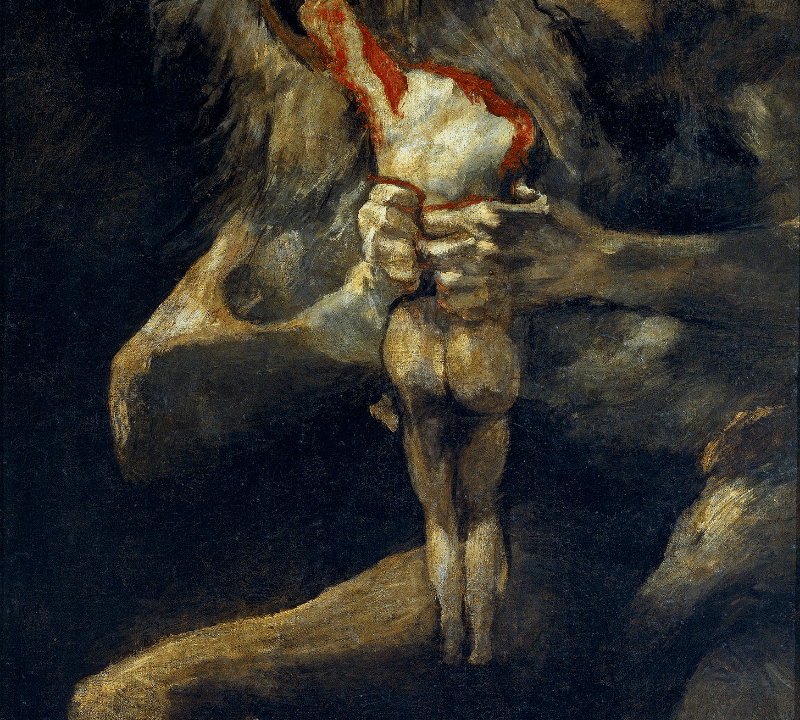
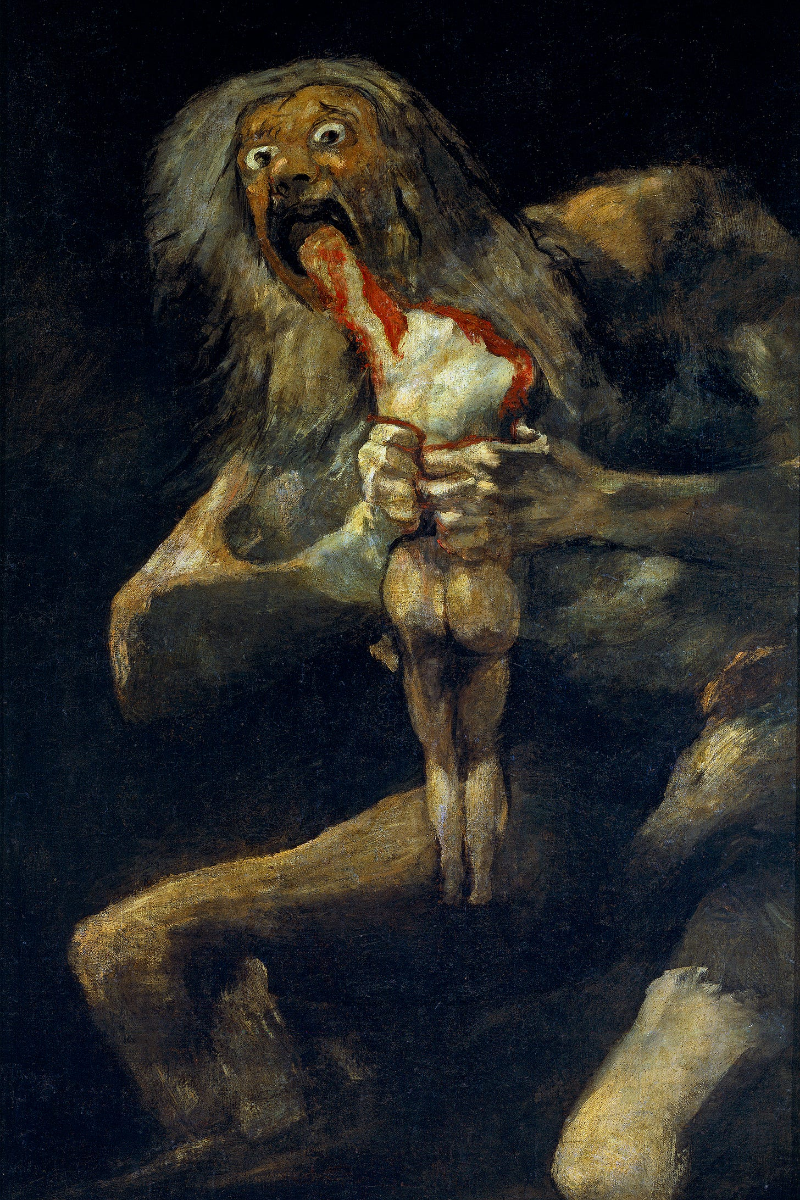
We’ve already seen one of these shadows, a lot of our generation grew up underneath it. The baby boomer generation (and the silent generation before them) were children of Tyrant Kings (painting with a broad brush, of course), fathers who were hardened by the harsh world they had to face and the evils they were compelled to conquer for the sake of their families. It’s difficult to indulge children in a discussion of fairness and turn their fighting into a learning opportunity when you’ve spent the last 12 hours mining coal. It’s tricky to model proper emotional regulation for your children when the last time you truly felt safe was just before a frag grenade shattered your leg in Normandy while fighting Nazis. Your scales of justice have been warped, the frames bent under the weight of an apathetic system designed to consume men.
Needless to say, I get it. I even empathize. The men of previous generations use to falter almost universally in the direction of the Tyrant.
Millennials have seen this form of leadership in the home and have decided that it is not for them. They have taken a more gentle (well, they think it’s gentle, but it usually turns out to be permissive) approach to parenting, and in the process a large swath of the population have fallen to the other side of the knife’s edge. They have become Puppet Kings, prioritizing kindness above all else, relinquishing authority for the sake of their children’s “peace” or “safety” and in forsaking their duty leaving their children to lead themselves, or abdicating their co-throne to let their wives rule alone. This is what Bill Maher is lamenting over, and (to a degree) rightly so. Children need leadership, they need guidance, rules, boundaries, and consequences. Millennial parents once again are ruled by fear – no longer the fear they felt of their fathers, but the fear of hurting their child.
So to come full circle, we see a wave of people calling for Tyrants to return to the familial thrones. “It was better back then!” They shout. And in some ways, maybe. But why not move forward, into something greater? Why not try to balance once again on the edge in between both?
We don’t need Trad Dads, we don’t need to “go back”, we need to integrate.
Every Father needs both an iron fist and a soft heart in order to become the integrated King that will raise a valiant generation.
The fully integrated King will embody the traits from both sides of the knife. It’s clear from the unprecedented amount of Adults severing relationships with their parents that the “traditional” approach to fatherhood has longer-lasting impacts than perhaps originally thought – and can be improved upon, and that permissive parenting can create children that are very difficult to be around.
I believe that stories, narratives and archetypes will teach us more than any lecture or self-help book ever can. So for those fathers reading this and wondering “How do I balance two such natures?”, I’d recommend the following.
Read these books to your children, and as they are lost in the tales of wonder and fantasy, you yourself can study carefully the examples of integrated kings.
Lord of the Rings – A classic, to be sure. Aragorn embodies an integrated king and brings a humbling perspective. I didn’t realize until reading these books again recently that what strikes me most about him is his fear, the lack of readiness he feels in taking on the mantle of responsibility. But when he does, he bears it well. However his example is not the most impactful one in this regard, not to me anyways. While you read, take careful note of Denethor, the Steward of Gondor, (The Tyrant King) and Theoden, King of Rohan (Begins as the Puppet King). Our friends at Salty Saints had some other great points on these two.
The Chronicles of Narnia – Aslan, famously a symbol for Christ, Aslan embodies those Christlike attributes that extend into the King Archetype. He’s dangerous, but gentle with the sons of Adam and daughters of Eve. There are times he speaks sharply with them, and there are times where he simply comforts. Edmund’s journey with Aslan is especially one to note, you can see how good leadership can transform a troubled youth into a King himself.
To wrap this up, when you as a father are feeling like things are not right in your house, and you hear critics like Bill Maher saying you shouldn’t be your kid’s friend, but rather an unfeeling judge in the home, take that feeling, and use it appropriately, speak sharply but with love. If you find yourself ruling with an iron fist and your children avoiding you or being withdrawn and distant to you, reach out and model friendship, extend kindness and be gentle. Your sons and daughters need to see that side of you too.
And, as a Christian man myself, it would be amiss to not mention that the most important example of all to follow is that of Christ, the fulfillment of the King archetype. All the greatest stories and the examples of positive Kings you’ll read will always just be a depiction of the author’s perspective and relationship to the Son of God. When you find yourself directly in line with the Son, you will not cast any shadow for your children to fall under, and can find balance.